



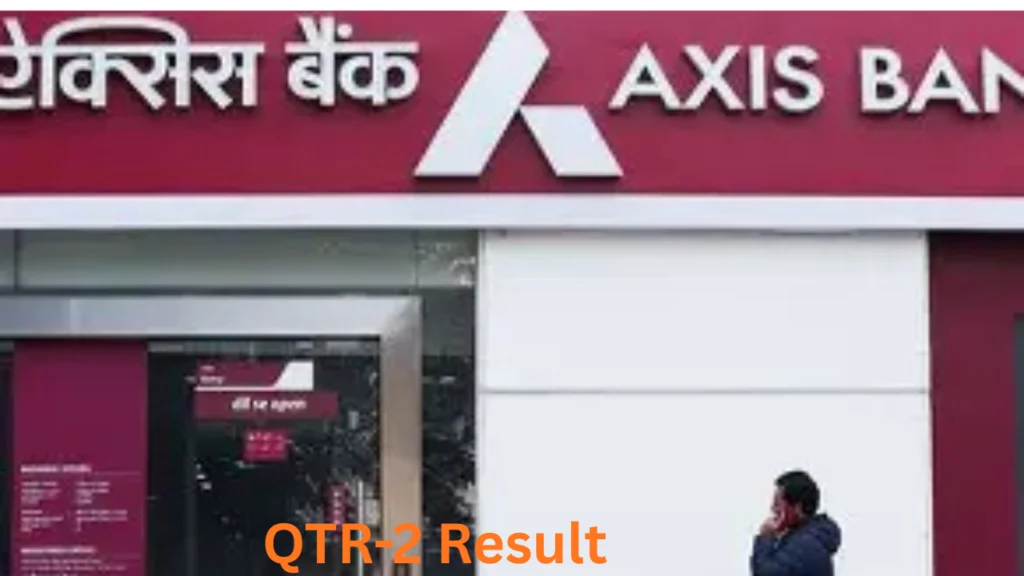
If you were keeping an eye on Axis Bank this October, you would have seen a mix of things. The bank said it made a net profit of roughly ₹5,090 crore for the quarter that ended in September 2025. This was about 26% less than the same quarter last year. Despite its initial negative appearance, the narrative that underpins it is quite distinct.
Yes, profits went down, but it was mostly because the bank set aside more money for possible loan losses. Many analysts believe that rather than taking short cuts, the bank is being cautious. A closer look reveals that revenue is increasing consistently, asset quality is improving, and the company is carefully preparing itself for the future, despite the headline statistic grabbing people’s attention.
What Really Happened This Quarter
The bank’s total income edged slightly higher, and net interest income rose modestly. These numbers indicate that lending operations are healthy. But the higher provisioning — the money the bank sets aside to cover potential bad loans — put pressure on the bottom line.
To put it simply: Axis Bank is trading short-term profit for long-term stability. It’s the kind of decision that might make traders a little nervous today but could pay off in a few quarters.
Asset Quality: The Bright Spote
The increase of non-performing assets (NPAs) is one of the most beneficial. Gross NPAs went down to 1.46%, and net NPAs went down a little to 0.44%. Slippages — the loans turning bad — also came down compared to the previous quarter. Meanwhile, the bank successfully recovered and upgraded loans worth a significant sum, while writing off some legacy bad loans.
If you ask any credit analyst, this tells a story: the bank is cleaning up its books, becoming stronger and more resilient. That’s a long-term positive, even if profits take a temporary hit.
Retail and SME Lending Lead the Way
Axis Bank is clearly betting on retail and SME segments. Why? Because these areas offer more predictable returns and are less prone to sudden shocks. Home loans, personal loans, credit cards, and SME financing are all showing steady growth.
In contrast, corporate lending is being handled more selectively. It seems the bank is focusing on quality over quantity, which may not boost quarterly profits dramatically but reduces risk for the future.
Digital Banking: A Quiet Revolution
The digital push at Axis Bank doesn’t always show up in earnings numbers. AI-powered systems are expediting loan approvals, mobile banking is more popular than ever, and partnerships with fintech companies are expanding the options for individuals to borrow and make payments.
CEO Amitabh Chaudhry said it best: “Transformation is not just about technology, it’s about relevance, strength, and responsibility.” In other words, the bank is preparing not just to survive, but to thrive in a fast-changing financial world.
How the Market Reacted
Shares dipped slightly — around 0.4% on NSE — but the reaction was muted. For investors watching closely, the market seems to understand that while profits slipped, the underlying health of the bank is improving. Strong NIMs and better asset quality matter more in the long run than a single-quarter profit drop.
Looking Ahead
What should investors watch next? A few points stand out:
Expansion of retail and SME loans
More credit cards and digital goods are being sold.
How much of the market is in rural and semi-urban areas
Selling insurance, wealth, and investment products to those who already have them
Even though Axis Bank’s quarterly profits fluctuate, all of these initiatives indicate that the company is preparing for long-term growth.
The Takeaway
If you merely look at the profit numbers, this quarter can feel like a setback. However, when viewed in a broader context, Axis Bank’s operations demonstrate that the business is well-run, has a long-term plan, and will remain stable.
In a nutshell: short-term pain, long-term benefit. The results might not have been great on their own, but the trend is clear: Axis Bank is getting ready to be a better, safer, and more flexible bank in the future.